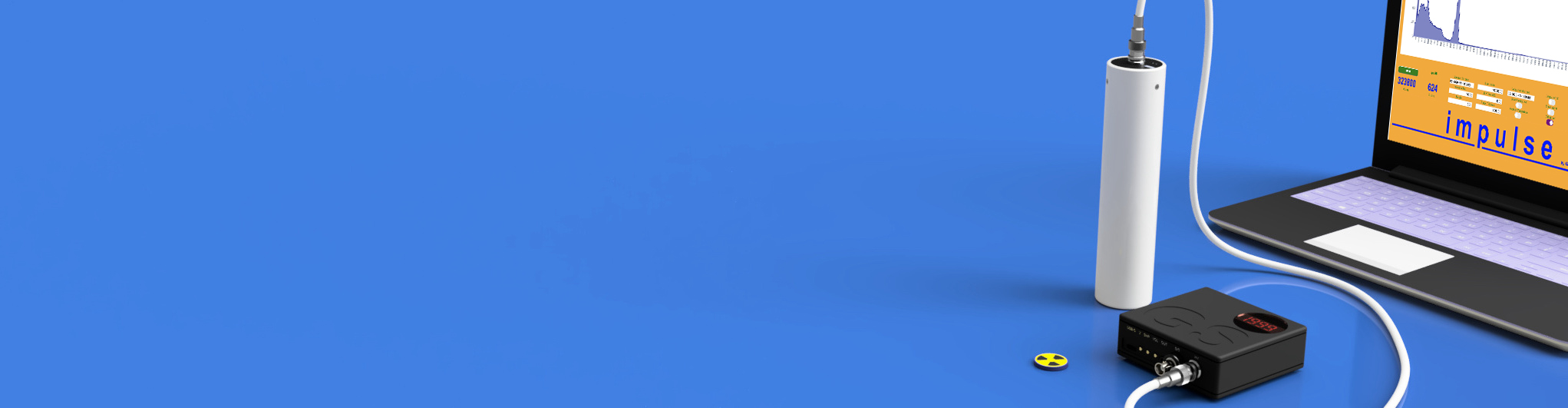
Since the MCA software doesn't allow energy calibration or anything else you'd need for spectroscopy I have decided to give InterSpec a try:
https://github.com/sandialabs/InterSpec
It works well, takes the exported .csv without any complaints and ecal works a treat!
I am totally new to the software and will keep you updated on my progress with it.
Red Pitaya MCA
-
GigaBecquerel
- Posts: 172
- Joined: 04 Jul 2020, 07:34
Re: Red Pitaya MCA
You do not have the required permissions to view the files attached to this post.
-
Conor Whyte
- Posts: 126
- Joined: 28 Apr 2019, 15:06
Re: Red Pitaya MCA
Once you set up interspect, it will hold the previous calibration auto identifying the new sample. Quite useful.
Interspect will also run on ARM processors. I am able to ID isotopes from my Red Pitaya via my iphone with interspec.
Interspect will also run on ARM processors. I am able to ID isotopes from my Red Pitaya via my iphone with interspec.
-
GigaBecquerel
- Posts: 172
- Joined: 04 Jul 2020, 07:34
Re: Red Pitaya MCA
Yeah, I played around a bit with it and it's *so* good!
Esp. with the HPGe, the nuclide ID works incredibly well. It runs good on linux (which was an issue with my ortec stuff before), but imo my phone is a bit small to use it properly.
I guess a tablet would be perfect here.
I'm so glad that I stumbeled over this, it is everything I've been looking for!
Esp. with the HPGe, the nuclide ID works incredibly well. It runs good on linux (which was an issue with my ortec stuff before), but imo my phone is a bit small to use it properly.
I guess a tablet would be perfect here.
I'm so glad that I stumbeled over this, it is everything I've been looking for!
-
Conor Whyte
- Posts: 126
- Joined: 28 Apr 2019, 15:06
Re: Red Pitaya MCA
It's perfect in a classroom too.
-
GigaBecquerel
- Posts: 172
- Joined: 04 Jul 2020, 07:34
Re: Red Pitaya MCA
Just a quick update to let you know this project isn't dead ;-)
Uni is slowing down things a bit, but I am still working on it.
I found the perfect case for it and started designing around it. It will contain the Pitaya, HPVS and a preamp, with PCBs as panels.
Yesterday I went to our FabLab to lasercut the PCBs from MDF for a test fit and I really like how it turned out!
I'll move a few things around and add a 10 turn pot to set the high voltage, but it looks like the panels are basically good as they are!
Some PCBs with prototypes for the preamp are on their way to me, once that works I can design the main PCB for its case.
The HVPS will be a readymade module with an ISEG APp 08 604 5 inside. That does 0-800V at <10 mVpp ripple / noise, which will be ideal for spectroscopy.
I'm also thinking about buying another of these cases as power supply with standard preamp power outputs in SUB-D 9, but I got this case as a sample from a fair, it may be hard to find the same one again.
Uni is slowing down things a bit, but I am still working on it.
I found the perfect case for it and started designing around it. It will contain the Pitaya, HPVS and a preamp, with PCBs as panels.
Yesterday I went to our FabLab to lasercut the PCBs from MDF for a test fit and I really like how it turned out!
I'll move a few things around and add a 10 turn pot to set the high voltage, but it looks like the panels are basically good as they are!
Some PCBs with prototypes for the preamp are on their way to me, once that works I can design the main PCB for its case.
The HVPS will be a readymade module with an ISEG APp 08 604 5 inside. That does 0-800V at <10 mVpp ripple / noise, which will be ideal for spectroscopy.
I'm also thinking about buying another of these cases as power supply with standard preamp power outputs in SUB-D 9, but I got this case as a sample from a fair, it may be hard to find the same one again.
You do not have the required permissions to view the files attached to this post.
-
Sesselmann

- Posts: 1392
- Joined: 27 Apr 2015, 11:40
Re: Red Pitaya MCA
Lukas,
Nice work. cool looking enclosure too, looking forward pro see the finished job.
You would probably be able to connect to that with Labview as well, if so you should be a bee to custom design a good dashboard.
Steven
Nice work. cool looking enclosure too, looking forward pro see the finished job.
You would probably be able to connect to that with Labview as well, if so you should be a bee to custom design a good dashboard.
Steven
-
GigaBecquerel
- Posts: 172
- Joined: 04 Jul 2020, 07:34
Re: Red Pitaya MCA
I got the first protoype PCBs and it required some bodging, but the preamp works well with the pitaya and it can all be supplied by a single USB connector!
At the moment I am still supplying the HV from a NIM HVPS, but that will change with the new hardware revision.
I am letting it run for a few hours right now so I can see the stability of my preamp, but it should be pretty good!
At the moment I am still supplying the HV from a NIM HVPS, but that will change with the new hardware revision.
I am letting it run for a few hours right now so I can see the stability of my preamp, but it should be pretty good!
You do not have the required permissions to view the files attached to this post.
-
Conor Whyte
- Posts: 126
- Joined: 28 Apr 2019, 15:06
Re: Red Pitaya MCA
Do you have a picture of the preamp? I was thinking perhaps of moving to a one of these
HV PSU and a custom PMT preamp boards by Micod in Russia.
HV PSU and a custom PMT preamp boards by Micod in Russia.
-
GigaBecquerel
- Posts: 172
- Joined: 04 Jul 2020, 07:34
Re: Red Pitaya MCA
The preamplifier is a simple CSA built around the LTC6228. It has a theoretical gain of 16 mV / pC, and a risetime of ~25 ns, measured with an Ortec 419 pulser on the input.
This exact OpAmp was chosen because of its high bandwidth, low drift and low noise. I have not tested it properly yet, as I'm still waiting for the proper PCBs (thermals in the case will be different), but taking a 24 h spectrum with my LaBr I did not see any noticeable drift during the over night temperature drop of ~4 k in my workshop.
This works perfectly for scintillators, but it might have a bit too much noise for semiconductor detectors, depending on your application.
The Micod stuff looks nice on paper, but I don't have any real life experience with it.
The HVPS is an ISEG APp 08 604 5. It takes 5V and outputs 0-800V at a maximum of 160 µA and 10 mVpp ripple, which is plenty for most scintillation detectors. For the sake of lower power consumption I prefer to run the PMTs at a lower voltage and with a higher gain preamp.
I could not find any specs on noise and efficiency for the micod HVPS, so I can't actually compare the two. The micod costs a fair bit more.
This exact OpAmp was chosen because of its high bandwidth, low drift and low noise. I have not tested it properly yet, as I'm still waiting for the proper PCBs (thermals in the case will be different), but taking a 24 h spectrum with my LaBr I did not see any noticeable drift during the over night temperature drop of ~4 k in my workshop.
This works perfectly for scintillators, but it might have a bit too much noise for semiconductor detectors, depending on your application.
The Micod stuff looks nice on paper, but I don't have any real life experience with it.
The HVPS is an ISEG APp 08 604 5. It takes 5V and outputs 0-800V at a maximum of 160 µA and 10 mVpp ripple, which is plenty for most scintillation detectors. For the sake of lower power consumption I prefer to run the PMTs at a lower voltage and with a higher gain preamp.
I could not find any specs on noise and efficiency for the micod HVPS, so I can't actually compare the two. The micod costs a fair bit more.
You do not have the required permissions to view the files attached to this post.
-
Conor Whyte
- Posts: 126
- Joined: 28 Apr 2019, 15:06
Re: Red Pitaya MCA
Looks like a good CSA chip. The stats for the uCSA by micod are about the same ~10-12.2mVpp range.
