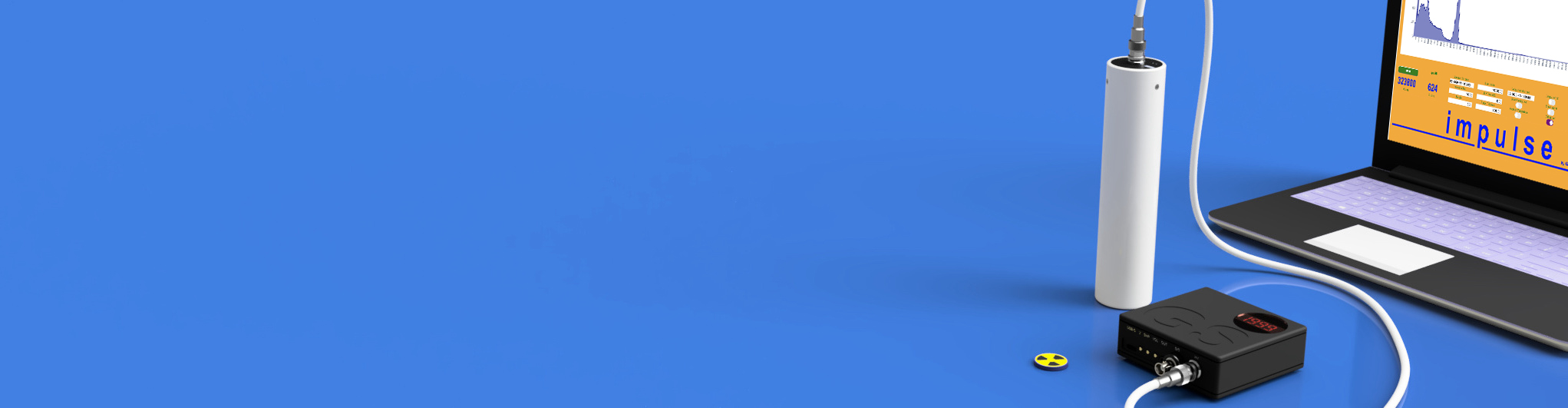
And here it is!
I got the PCBs today. Looks like I forgot to remove the order numbers, but they're small enough not to be a bother.
I made a few mistakes on the PCB, but nothing that could not be bodged into working ;-)
I *love* how the case turned out, and it looks like its working well.
Now I have to test the whole system for noise and drift, I'll keep you updated!
Red Pitaya MCA
-
GigaBecquerel
- Posts: 172
- Joined: 04 Jul 2020, 07:34
Re: Red Pitaya MCA
You do not have the required permissions to view the files attached to this post.
-
luuk
- Posts: 313
- Joined: 01 May 2015, 21:00
Re: Red Pitaya MCA
Hi Lukas,
That is a great looking mca you designed there, very very nice I like it!
Great job,
Luuk
That is a great looking mca you designed there, very very nice I like it!
Great job,
Luuk
-
GigaBecquerel
- Posts: 172
- Joined: 04 Jul 2020, 07:34
Re: Red Pitaya MCA
Hi Luuk,
Thank you!
The MCA ran the whole night and I was hoping for a nice spectrum this morning, but apparently I forgot to set something longer than the default 1800s...
Well, it can run over the day, at least it had enough time to reach thermal equilibrium by now :D
Thank you!
The MCA ran the whole night and I was hoping for a nice spectrum this morning, but apparently I forgot to set something longer than the default 1800s...
Well, it can run over the day, at least it had enough time to reach thermal equilibrium by now :D
-
GigaBecquerel
- Posts: 172
- Joined: 04 Jul 2020, 07:34
Re: Red Pitaya MCA
There is no better way to phrase this:
Holy shit.
After measuring for 4 hours (no shielding, just the sample infront of the detector) the Cs137 peak is showing up as 3.11%!
During that time the ambient temperature in my room rose by ~3 k. This is a way better result than I could have ever hoped for and I am so very happy with it!
Holy shit.
After measuring for 4 hours (no shielding, just the sample infront of the detector) the Cs137 peak is showing up as 3.11%!
During that time the ambient temperature in my room rose by ~3 k. This is a way better result than I could have ever hoped for and I am so very happy with it!
You do not have the required permissions to view the files attached to this post.
-
Rob Tayloe
- Posts: 180
- Joined: 10 Nov 2020, 12:00
Re: Red Pitaya MCA
I obtained a Red Pitaya 125-14 and hooked it up to a new Strontium Iodide detector. It was quite easy to use the MCA-PHA software and a Cs-137 spectrum was quickly produced.
The Strontium Iodide detector only requires a connection to the cathode and anode. Power was supplied by three 9 V batteries. A 50 ohm termination resistor was added. Some vendor info on the Strontium Iodide detector is included below.
The Strontium Iodide detector only requires a connection to the cathode and anode. Power was supplied by three 9 V batteries. A 50 ohm termination resistor was added. Some vendor info on the Strontium Iodide detector is included below.
You do not have the required permissions to view the files attached to this post.
-
GigaBecquerel
- Posts: 172
- Joined: 04 Jul 2020, 07:34
Re: Red Pitaya MCA
Hi Rob,
That's a very cool detector!
I've never seen SrI:Eu out in the wild...
With some shielding and a detent preamp you should get some amazing spectra from it!
Where did you get this one from?
That's a very cool detector!
I've never seen SrI:Eu out in the wild...
With some shielding and a detent preamp you should get some amazing spectra from it!
Where did you get this one from?
-
Rob Tayloe
- Posts: 180
- Joined: 10 Nov 2020, 12:00
Re: Red Pitaya MCA
I purchased the Strontium Iodide detector from:
Ivan V. Khodyuk email: khodyuk@capesym.com
CapeSym, Inc.
6 Huron Dr.
Natick, MA 01760
508-653-7100 x214
https://capesym.com/
The cost was $1250 plus shipping ($25 in US). The spec sheet for my detector from the vendor is attached -
Ivan V. Khodyuk email: khodyuk@capesym.com
CapeSym, Inc.
6 Huron Dr.
Natick, MA 01760
508-653-7100 x214
https://capesym.com/
The cost was $1250 plus shipping ($25 in US). The spec sheet for my detector from the vendor is attached -
You do not have the required permissions to view the files attached to this post.
-
GigaBecquerel
- Posts: 172
- Joined: 04 Jul 2020, 07:34
Re: Red Pitaya MCA
That's surprisingly affordable, I would not have been surprised if it cost twice as much!
Very cool, I'm looking forward to some nice spectra from you :)
Very cool, I'm looking forward to some nice spectra from you :)
-
Rob Tayloe
- Posts: 180
- Joined: 10 Nov 2020, 12:00
Re: Red Pitaya MCA
I am still playing around with the MCA-PHA software. I see that one can use the "register" button to save data (e.g., counts in each "channel") as an ascii text file. I will likely need to use a separate program (can't get used to calling them "apps") for data analysis. I downloaded interspec, but haven't done anything yet with this.
I also have some old fortran programs. Many of these were developed by R. Gunnink and J.B. Niday when they were with the Univ of Calif. at the Lawrence Livermore Lab. Some years back I talked with Ray Gunnink. He had retired to Michigan and was working for Ortec (or maybe it was Canberra, can't recall for certain). He was still programming in fortran. [I just need to find a paper tape punch and reader and perhaps a card punch and reader as well!! :-) :-) ]
I may have to go on-line to Ohio State's library and find some of the old technical reports. I still have my old copy of Bevington and some of the old fortran routines from long ago.
For graphical stuff I like the Dislin package (subroutines callable from fortran and other languages). Dislin is free for non-commercial use and is available from the Max Planck Institute.
https://www.mps.mpg.de/dislin/
I did some fairly quick measurements yesterday. Below is Eu-152.
I also have some old fortran programs. Many of these were developed by R. Gunnink and J.B. Niday when they were with the Univ of Calif. at the Lawrence Livermore Lab. Some years back I talked with Ray Gunnink. He had retired to Michigan and was working for Ortec (or maybe it was Canberra, can't recall for certain). He was still programming in fortran. [I just need to find a paper tape punch and reader and perhaps a card punch and reader as well!! :-) :-) ]
I may have to go on-line to Ohio State's library and find some of the old technical reports. I still have my old copy of Bevington and some of the old fortran routines from long ago.
For graphical stuff I like the Dislin package (subroutines callable from fortran and other languages). Dislin is free for non-commercial use and is available from the Max Planck Institute.
https://www.mps.mpg.de/dislin/
I did some fairly quick measurements yesterday. Below is Eu-152.
You do not have the required permissions to view the files attached to this post.
-
Rob Tayloe
- Posts: 180
- Joined: 10 Nov 2020, 12:00
Re: Red Pitaya MCA
The folks at CapeSym let me know that it is now possible to order on-line at the link below:
https://capescint.com/product-category/ ... ssemblies/
They also let me know that I wasn't capturing the entire pulse, based on my initial playing with the Red Pitaya. It was indicated that a 3% resolution for 662 keV was possible by capturing the full pulse. Following is the specifics with an image -
"From the shape of the spectrum, I can guess that you are not collecting the entire pulse (shoulder on the right). The signal from SrI detector is rather long compared to other scintillators. You need about ~20us to collect the entire pulse and achieve 3% energy resolution. Below is an image of the regular (left) and fast (right) signals from the Macropixel."
https://capescint.com/product-category/ ... ssemblies/
They also let me know that I wasn't capturing the entire pulse, based on my initial playing with the Red Pitaya. It was indicated that a 3% resolution for 662 keV was possible by capturing the full pulse. Following is the specifics with an image -
"From the shape of the spectrum, I can guess that you are not collecting the entire pulse (shoulder on the right). The signal from SrI detector is rather long compared to other scintillators. You need about ~20us to collect the entire pulse and achieve 3% energy resolution. Below is an image of the regular (left) and fast (right) signals from the Macropixel."
You do not have the required permissions to view the files attached to this post.
