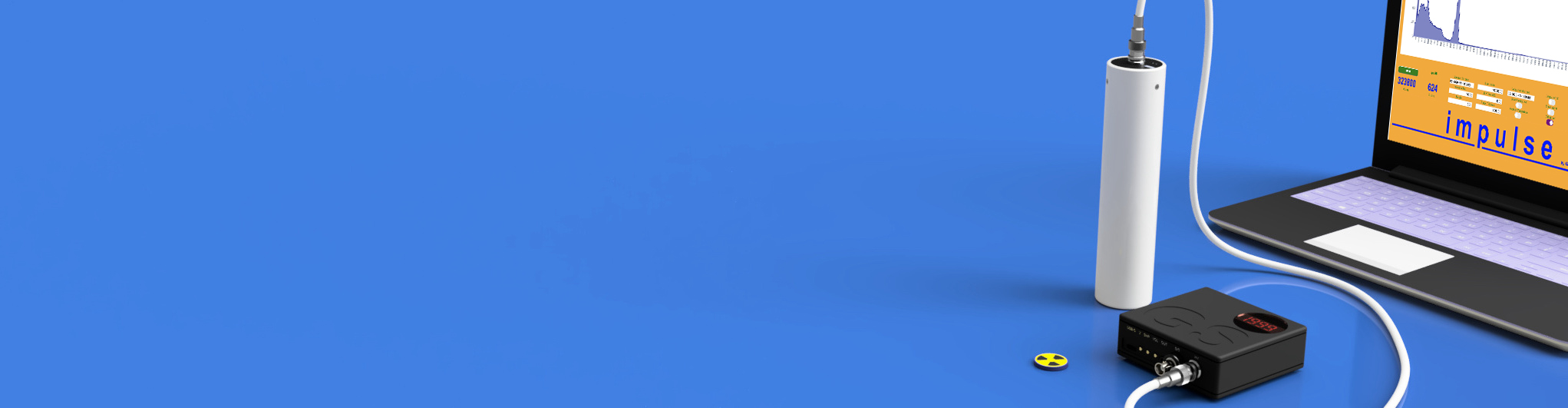

Hi Lodovico
I see you have added many more scans of elements and the mineral ore Monazite to your XRFSpec document. Good to see you are continuing to update this excellent resource document. I noticed your revision date of 2/17/2015 remained the same as the older document I had, and that the document on Theremino.com web site has not been updated yet. Very nice well documented work, please keep it up. Tom
XRF Gold Assay Experiment
-
lodovico
- Posts: 64
- Joined: 10 May 2015, 23:08
Re: XRF Gold Assay Experiment
Hi Tom,
yes, you are right, it would be better to update the revision date (or add a revision document), I will do it in the next release !
In short time I will also update the document on the Theremino site..
Lodovico
yes, you are right, it would be better to update the revision date (or add a revision document), I will do it in the next release !
In short time I will also update the document on the Theremino site..
Lodovico
-
Ian
- Posts: 2
- Joined: 10 Sep 2016, 10:08
Re: XRF Gold Assay Experiment
Hi Steven,
I'm very impressed by your spectrum of the Australian Dollar coin, especially the fact that you can clearly see the Al peak and that you can resolve the Cu and Ni peaks. I've been trying to see the 1.58 keV line of an Al plate but haven't been successful yet. I would love to learn from your XRF experience.
My setup consists of a 3" PMT with a 0.25 mm Zns(Ag) scintillator and a rad-film cover provided by Tom of iRad (thanks Tom!). As a driver I use a GS-2002 Pro (at 940V and with the preamp gain turned up) with an ultra low noise power supply. On the software side, I've been using Theremino MCA. My noise level between pulses is around 0.8 mV peak-to-peak.
To calibrate I use a 18 uCi Fe-55 source which I can see well (although I can't clearly tell apart the 5.2 and 5.9 keV lines expected here). For the actual XRF I've tried with two of the 18 uCi Fe-55 sources as well as with a 180 uCi Co-57 source.
In either case, without "BaseLine test" activated in Theremino MCA, I get a lot of noise counts from 1.5 keV downward (and a total of >10k counts per sec). With "BaseLine test" activated and Max noise at 40%, things look cleaner down around 0-2 keV (and I get a total of only 75 counts per sec) but I'm afraid I might also weed out the 1.58 KeV signal.
I would much appreciate your advice on how to get such a clear signal in the 1.5 kev region. Here are a few questions I'd love to ask about your Dollar coin spectrum:
1) Do you know (roughly) what the uCi activity of your Am sources is?
2) How long did you let the system run to obtain the Dollar coin spectrum?
3) I haven't had a closer look at PRA yet. Does it have significant advantages over Theremino MCA with respect to distinguishing between actual low energy pulses and noise?
4) Did it require a lot of tweaking of PRA settings to get such a sharp spectrum?
5) Did you apply some form of background subtraction?
Thanks a lot for your time and all the great work,
Ian
I'm very impressed by your spectrum of the Australian Dollar coin, especially the fact that you can clearly see the Al peak and that you can resolve the Cu and Ni peaks. I've been trying to see the 1.58 keV line of an Al plate but haven't been successful yet. I would love to learn from your XRF experience.
My setup consists of a 3" PMT with a 0.25 mm Zns(Ag) scintillator and a rad-film cover provided by Tom of iRad (thanks Tom!). As a driver I use a GS-2002 Pro (at 940V and with the preamp gain turned up) with an ultra low noise power supply. On the software side, I've been using Theremino MCA. My noise level between pulses is around 0.8 mV peak-to-peak.
To calibrate I use a 18 uCi Fe-55 source which I can see well (although I can't clearly tell apart the 5.2 and 5.9 keV lines expected here). For the actual XRF I've tried with two of the 18 uCi Fe-55 sources as well as with a 180 uCi Co-57 source.
In either case, without "BaseLine test" activated in Theremino MCA, I get a lot of noise counts from 1.5 keV downward (and a total of >10k counts per sec). With "BaseLine test" activated and Max noise at 40%, things look cleaner down around 0-2 keV (and I get a total of only 75 counts per sec) but I'm afraid I might also weed out the 1.58 KeV signal.
I would much appreciate your advice on how to get such a clear signal in the 1.5 kev region. Here are a few questions I'd love to ask about your Dollar coin spectrum:
1) Do you know (roughly) what the uCi activity of your Am sources is?
2) How long did you let the system run to obtain the Dollar coin spectrum?
3) I haven't had a closer look at PRA yet. Does it have significant advantages over Theremino MCA with respect to distinguishing between actual low energy pulses and noise?
4) Did it require a lot of tweaking of PRA settings to get such a sharp spectrum?
5) Did you apply some form of background subtraction?
Thanks a lot for your time and all the great work,
Ian
-
Sesselmann

- Posts: 1398
- Joined: 27 Apr 2015, 11:40
Re: XRF Gold Assay Experiment
Ian,
I have no experience with Zns(Ag) scintillator, so I can't give you any advice here. Maybe someone else can comment.
The following link describes Zns(Ag) as a neutron detector.
http://www.hep.ph.ic.ac.uk/fets/pepperp ... ns_602.pdf
Steven
I have no experience with Zns(Ag) scintillator, so I can't give you any advice here. Maybe someone else can comment.
The following link describes Zns(Ag) as a neutron detector.
http://www.hep.ph.ic.ac.uk/fets/pepperp ... ns_602.pdf
Steven
-
Ian
- Posts: 2
- Joined: 10 Sep 2016, 10:08
Re: XRF Gold Assay Experiment
Thanks for your quick reply, Steven!
Let me try to replicate your setup then as it is the only one I found on the web that could clearly see the 1.58 keV Al line.
Can you share how thick your NaI scintillator is? Also, do you know the thickness of your beryllium window?
Any recommendations where I could buy these parts, or a such a detector as a whole?
Ian
Let me try to replicate your setup then as it is the only one I found on the web that could clearly see the 1.58 keV Al line.
Can you share how thick your NaI scintillator is? Also, do you know the thickness of your beryllium window?
Any recommendations where I could buy these parts, or a such a detector as a whole?
Ian
-
Sesselmann
- Posts: 1398
- Joined: 27 Apr 2015, 11:40
Re: XRF Gold Assay Experiment
Ian,
It was a while since I had a play with XRF and for sure I am no expert in that area, but the mere fact that I am getting different peaks from differing target materials indicates we are seeing XRF spectra.
The detector is a 1.5" ADIT PMT with a thin beryllium windowed NaI(Tl) crystal, it was given to me by a friend and if I recall it has a small crack, which doesn't seem to affect the spectra too much.
The lead collimator with three small smoke detector Am sources is of my own construction. I made up a mould with the inverse shape and cast the lead into it. After casting I cleaned it up on the lathe a bit (see images). I think it could be dramatically improved by adding another three Am sources so it has a ring of six sources.
I ran a few spectra with it today, they are all different but I haven't bothered identifying the peaks.
Steven
It was a while since I had a play with XRF and for sure I am no expert in that area, but the mere fact that I am getting different peaks from differing target materials indicates we are seeing XRF spectra.
The detector is a 1.5" ADIT PMT with a thin beryllium windowed NaI(Tl) crystal, it was given to me by a friend and if I recall it has a small crack, which doesn't seem to affect the spectra too much.
The lead collimator with three small smoke detector Am sources is of my own construction. I made up a mould with the inverse shape and cast the lead into it. After casting I cleaned it up on the lathe a bit (see images). I think it could be dramatically improved by adding another three Am sources so it has a ring of six sources.
I ran a few spectra with it today, they are all different but I haven't bothered identifying the peaks.
Steven
You do not have the required permissions to view the files attached to this post.
-
Peter-1
- Posts: 170
- Joined: 07 Oct 2016, 01:45
Re: XRF Gold Assay Experiment
Hello Steven,
A very interesting method. Can you explain what is this for a detector. (xrf crystal with a beryllium window)
Peter
A very interesting method. Can you explain what is this for a detector. (xrf crystal with a beryllium window)
Peter
