Hi folks,
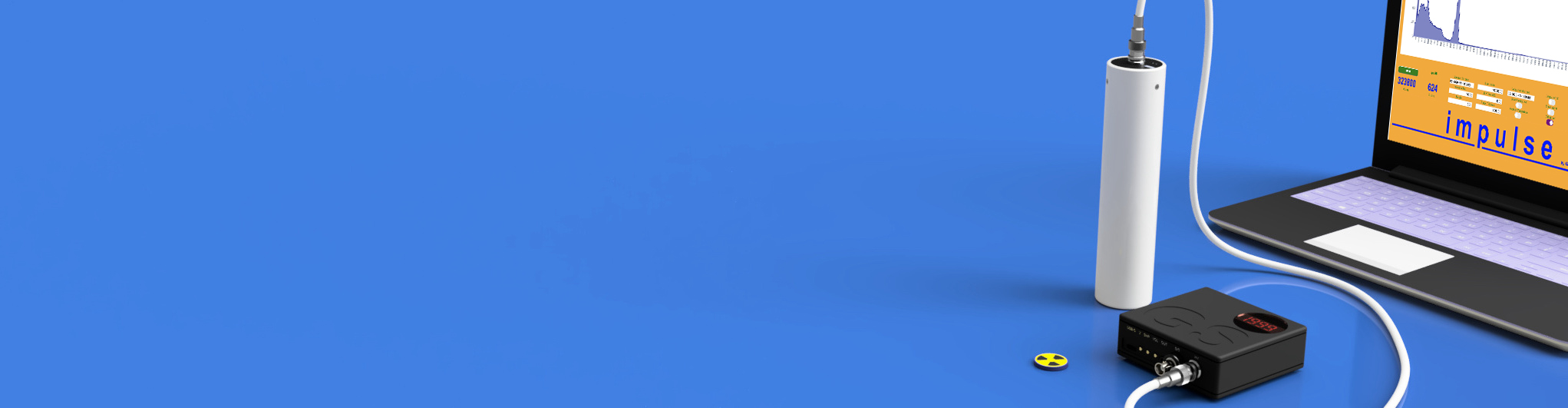
This is a long holiday weekend in Italy, so yesterday I took the chance and took my brand new spectroscopic dosimeter to take some spectra and measurement in Orvieto, an ancient beautiful city in southwestern Umbria, a region in mid-Italy, famous, among other things, for its dome. Photography is one of my hobbies so I took some shot there, the ones attached are compressed badly, original files are 10-12 MB each. But the main goal was to hunt some gammas.
The place is little more than an hour from my home and its particularity is being founded on volcanic Tuff and Pozzolana.
Besides that nearly all the way of the city are in porphyry, so basically Orvieto is everything a place needs to be to be fairly radioactive, and it fact it is. UNSCEAR 2008 Report “SOURCES AND EFFECTS OF IONIZING RADIATION” lists it among the examples of areas of high natural radiation background (Table 10 – Page 116 of the document) http://large.stanford.edu/courses/2014/ ... unaY3Z-EYs
According to the document the average exposure in air is 0.56 μGy/h. I finally had the chance to take measurements of my own there.
Background in my area varies between 0.05 and 0.15 μSv so when I got readings above 0.40 as soon as I got out of the parking I knew I was in for an interesting day.
Walking the streets the reading oscillates between 0.30 and 0.50. As soon as I stepped in a relatively narrow alley named “Via della Costituente” the reading jumped to 0.70, the reason being you are closer to the walls. I took a 999 seconds spectrum, average dose rate is 0.713.
Once I figured out how it worked I stepped into every small alley I saw, and after a while I found one, named “Vicolo Reto Lungo”, where readings were even higher. The walls at contact gave me more than 0.80 μSv/h.
I decided to do things seriously there, I wanted more than a million counts, which meant I had to stay there, standing still, for 50 minutes. I think I need a portable stool for this kind of things…
The average dose was 0.757 μSv/h, pretty amazing.
Here are the spectrum in logarithmic and linear scale.
Then I went into a 62 meter deep well known as “Saint Patrick’s well”, a pretty famous attraction of the city.
Pretty decent reading there too..
I saved the best for last and I took a guided tour of the underground. There are more 1000 caves under the city, used for various purposes in ancient times. It’s pretty narrow down there and you are surrounded by pozzolana (80%) and tuff (20%). In the photo the ceiling is pretty high, but in other areas is a lot lower than that.
Readings are regularly close to 0.80 and above, but at one particular spot it went as high as 0.91, twice, that’s a lot of gammas!
Unfortunately you can’t access the caves on your own (unless you know someone who owns one) so, being in a guided tour where you have to move from one “room” to the next with the rest of the group, I couldn’t record any spectrum there.
I stayed in Orvieto for eight hours, I recorded four spectra for a total time of about 100 minutes. It was a lot of fun I can tell you. Luckly nobody asked me what I was doing…
That’s all from Orvieto. Until next time.
Massimo
Orvieto - High Natural Radiation Background
-
Go-Figure
- Posts: 224
- Joined: 04 May 2019, 22:24
Orvieto - High Natural Radiation Background
You do not have the required permissions to view the files attached to this post.
-
sgt_bear
- Posts: 117
- Joined: 16 Jan 2017, 07:06
Re: Orvieto - High Natural Radiation Background
First of all, i really like the first photo, very nice work. What camera you use?
About the gammas, as far as i know, pozzolana and tuff are volcanic ashes or lava rock... do you know if only the volcanic ash in that place is slightly radioactive, or if all volcanic ashes are this way? I'm wondern because i visited the country of icleland last week, and it looks like quite all of the island is made out of lava rock.
About the gammas, as far as i know, pozzolana and tuff are volcanic ashes or lava rock... do you know if only the volcanic ash in that place is slightly radioactive, or if all volcanic ashes are this way? I'm wondern because i visited the country of icleland last week, and it looks like quite all of the island is made out of lava rock.
-
pilgrim
- Posts: 94
- Joined: 06 Nov 2017, 03:28
Re: Orvieto - High Natural Radiation Background
Great work and reportage, Massimo.
I join to the Jonathan's question about the camera (photography is one of my hobbies too ) : the DSC prefix suggests me you use a Nikon camera ;-)
Ps : The PDS has become you best friend! ;-) ;-)
I join to the Jonathan's question about the camera (photography is one of my hobbies too ) : the DSC prefix suggests me you use a Nikon camera ;-)
Ps : The PDS has become you best friend! ;-) ;-)
-
Go-Figure
- Posts: 224
- Joined: 04 May 2019, 22:24
Re: Orvieto - High Natural Radiation Background
Well, my philosophy is when I am traveling everything must be as portable as it can be. The camera is a Sony RX100 IV https://www.sony.it/electronics/fotocam ... sc-rx100m4
I bet you and Daniel you were thinking about something "bigger"!
If you read a little bit about it in the Internet you will find it's surprisingly good for its size.
I started using the first RX100 a few years ago and found it was ideal to carry around while traveling, then I updated it to the RX100IV which is a big step forward, there's new one of them out basically every year. If you use it properly in manual mode you can do surprising things with it.
All volcanic rocks I tested were radioactive above the average to some degree, but I seem to remember reading those from Iceland and Hawaii has less Uranium and Thorium in them, but I can't give you a reliable source for this.About the gammas, as far as i know, pozzolana and tuff are volcanic ashes or lava rock... do you know if only the volcanic ash in that place is slightly radioactive, or if all volcanic ashes are this way? I'm wondern because i visited the country of icleland last week, and it looks like quite all of the island is made out of lava rock.
Oh yeah, it can't compete with the 2''x2'' NaI(Tl) and it doesn't get anything below 35 keV and above 2100 keV, but being able to acquire spectra outdoor wherever you are is really a lot of fun!Ps : The PDS has become you best friend! ;-) ;-)
